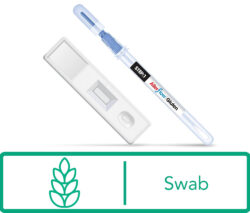
Using general protein tests, like AllerSnap®, can be so important for food production and allergen safety plans.

Over the past twenty years, allergen management for American food and beverage manufacturers has shifted. What used to be optional and unregulated is now mandatory and monitored. Along the way, food manufacturers have built a wealth of experience in managing and preventing allergen cross-contact. There is plenty of information available online for any quality control team who wishes to learn more about creating and maintaining a good allergen management plan. However:
Allergens remain a top cause of food recalls. These recalls are often attributed to incorrect packaging or labeling errors. For the most part, manufacturers are doing a good job of minimizing the risk of trace amounts of common allergens.
And what tools are manufacturers using to keep their products both safe and FSMA-compliant? One important tool is a general protein swab. Protein swabs are quick, simple, and inexpensive — and they can provide an early warning that something isn’t quite right.
An onsite protein swab serves as a verification point, confirming that your team did (or did not) clean the surface in question. The rapid results allow your team to react early and quickly to any lapse in cleaning. Protein swabs cannot determine which protein or proteins are present on the surface — but a failing result indicates improper materials handling or incomplete cleaning.
Protein swabs can also be useful in cases where there are multiple allergens present, or allergens that rarely have their own specific rapid test. For example, less-common tree nuts like hickory or pine nut must be as carefully managed as almond or hazelnut — but there are fewer rapid test methods available.
Frequent and regular testing with a protein swab like AllerSnap®, PRO-Clean, or Path-Chek confirms that cleaning procedures are removing allergen residues. These protein swabs do not replace the need for specific-allergen testing via ELISA or LFD, but they can increase facility safety while also managing costs.