
We all know that gluten detection is complicated. One reason why? Gluten isn’t just one thing. It’s found in wheat, barley, and rye (not to mention sub-varietals like kamut and spelt). Gluten is combined with all sorts of other ingredients, and processed in myriad ways from baking to fermenting.
All of these varieties and variations change the shape of the gluten proteins, splitting and warping them in unexpected ways. This can be a challenge for antibody-based tests (ELISAs and LFDs). The tests’ antibodies must be able to identify and bind with gluten, but processed gluten can be hard to “find.” Unfortunately, it can still trigger reactions in people who need to avoid gluten.
One of the trickiest forms of gluten to detect is deamidated gluten — which is why Emport LLC is so pleased to carry the OnSite Gluten rapid kits. The OnSite Gluten kits use the 2D4 antibody, which is uniquely able to detect both chemically unmodified and deamidated gluten. So let’s talk about what deamidation is, how deamidation impacts gluten, and why it’s important for food manufacturers to be mindful of these challenges.
What is deamidation? What is deamidated gluten?
On a purely technical level, deamidation is, “The process of removing an amino group from an amide, either by hydrolysis or by a transfer reaction” (Oxford Reference).
More plainly, deamidation is a modification of the structure of certain amino acids (and amino acids are the building blocks of proteins). Deamidation happens when proteins are subjected to heat and acid or to certain enzymes.

Sometimes deamidation is an unintended byproduct of food processing. Other times deamidated gluten is used as an intentional ingredient. Deamidation also happens in the body, during digestion. In fact, celiac diagnostic panels often test for Deamidated Gliadin Peptide IgA and IgG (DGP-IgA/IgG).
Why is deamidated gluten a useful — but challenging — ingredient?
In many cases, gluten simply becomes deamidated during cooking or processing. After all, heat and acid are common parts of cooking! Intentionally deamidated gluten is sold under a variety of names including Wheat Protein Isolate (WPI), vital wheat gluten, and textured wheat protein. These ingredients are useful for improving the taste, texture, and/or nutritional profile of various foods. Accordingly, manufactures include deamidated gluten — under other names — in everything from breakfast cereals to snack bars or veggie burgers.
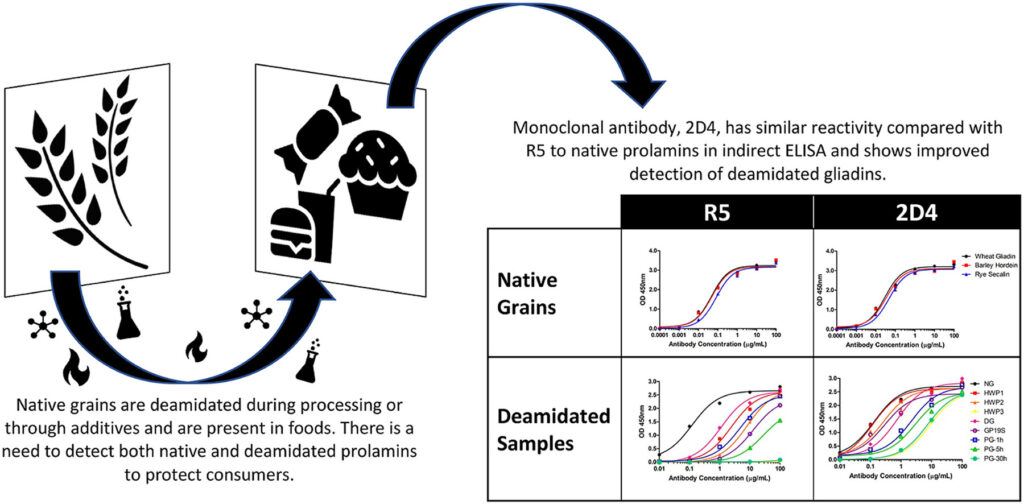
Of course, if you have celiac disease, a wheat allergy, or avoid gluten for any other reason: none of this matters. You need to avoid the gluten no matter what form it takes. Unfortunately, the tests that easily recognize unprocessed, native gluten can struggle to recognize deamidated gluten (read more on the science of gluten detection here).
How can food manufacturers best manage deamidated gluten?
Validating your test methods is a critical part of any allergen control plan. In other words: you must prove that your test kits can identify the gluten (or allergens) that may be present in your facility. The more complicated your ingredients and processing are, the more important kit validation is.
If your facility primarily works with uncooked, simple ingredients — you will likely have good results with any commercially available test kit. If you use WPI or other similar ingredients intentionally — or if your processing makes deamidation likely, take care. If your facility runs any products that do not have gluten or wheat in them, you’ll want to be extra careful vetting your allergen cleaning program. Your test kits may under-recognize gluten, and that can lead to false negatives.
One solution: use a test kit incorporating the 2D4 antibody. The 2D4 antibody was specifically developed to handle both native/unprocessed gluten AND deamidated gluten (read more here). It has been shown to detect gluten from wheat, barley and rye in a very similar manner to the R5 antibody. However, it also offers increased detection of deamidated gluten compared to the R5. And, while ELISA kits using the 2D4 antibody have been available for years — a rapid LFD was only recently introduced.
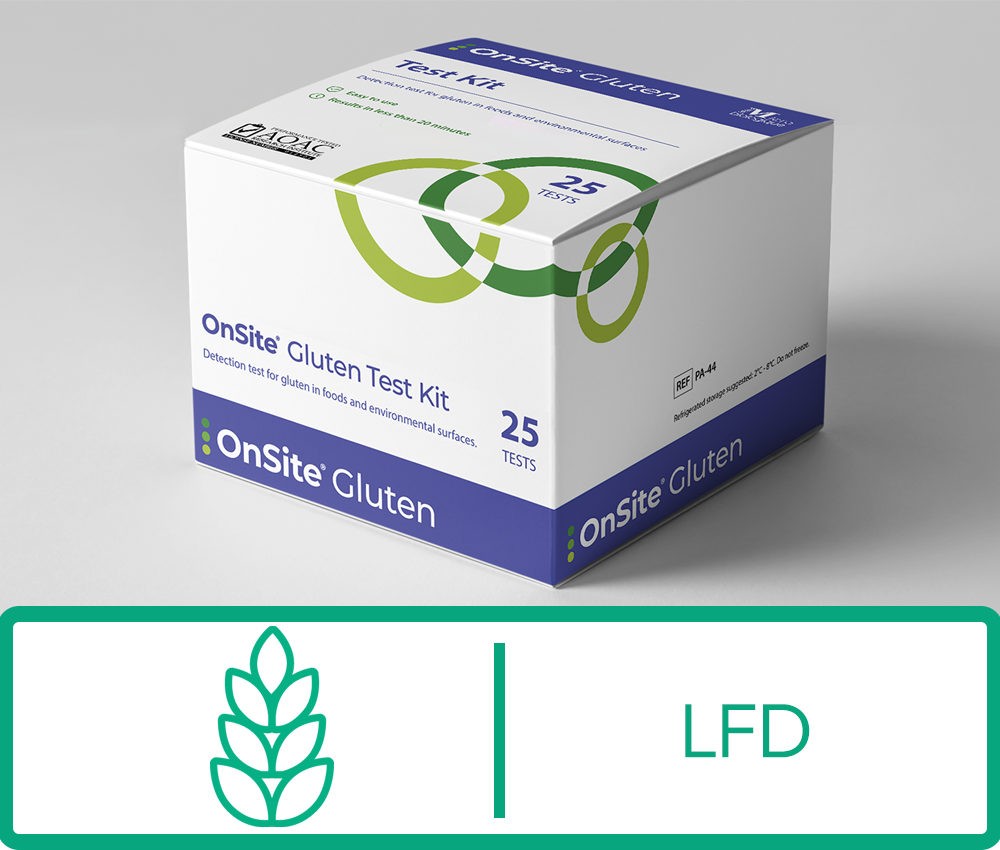
This kit, OnSite Gluten, holds AOAC-PTM license 012501. It has been validated against matrices including rice flour, oat flour, spice mix, bread, and stainless steel surfaces. Additionally, the validation process included bread incurred separately with wheat, barley, and rye — offering increased confidence against cross contact due to agricultural co-mingling.
The kit is a welcome addition to Emport LLC’s collection of easy, accurate test kits for food manufacturers and commerical kitchens.
Next steps for manufacturers
Wondering how to validate your current test methods? Curious about incorporating a test kit with the 2D4 antibody into your allergen management plan? Get in touch! Our team is on standby, waiting to walk you through our catalog.